
One Domain Name, a Dozen Legal Systems, One Common Truth
Your domain name sits on the balance sheet and in your estate, reachable by creditors, yet courts disagree on its legal nature — property, contract, a sign, or virtual asset, leaving uncertainty.

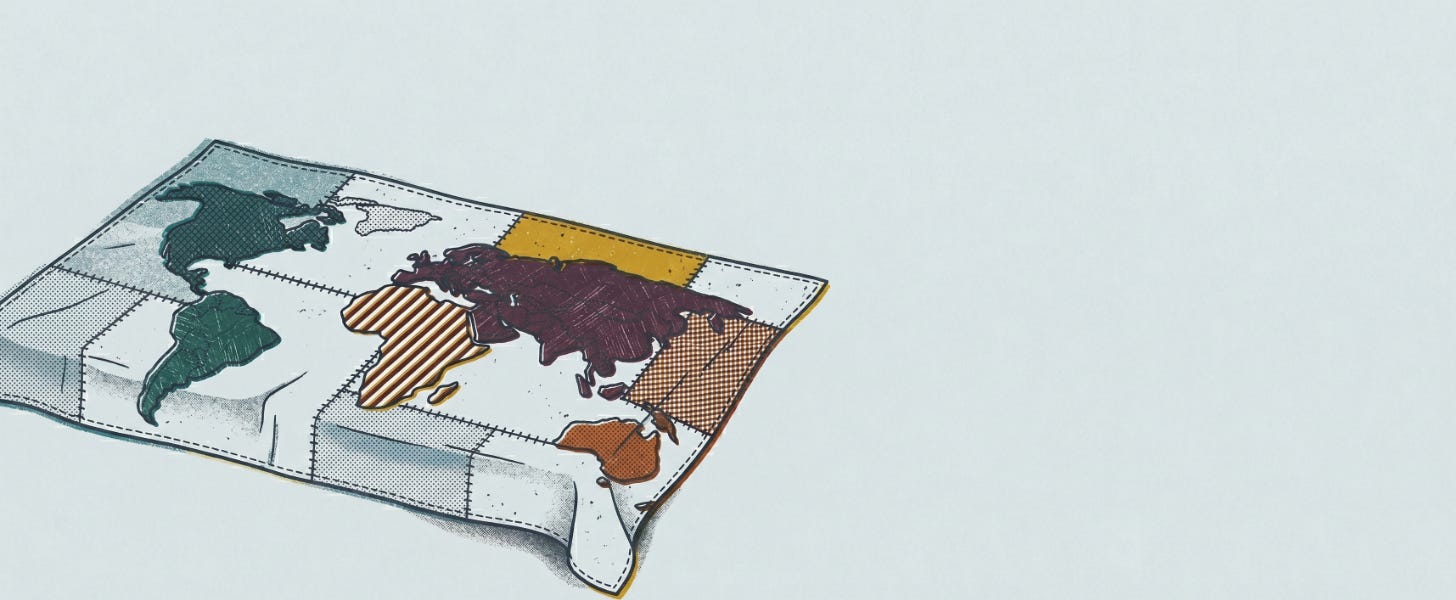
You bought your domain name.
It’s on the balance sheet. It’s in your brand, your email, every contract you sign.
But you don’t own a thing.
You hold a relationship.
What changed hands when you “bought” it was not the name. It was a renewable claim against a registry.
This is not a metaphor, and not the cynical line that you are “only renting.” It is what the courts of the major jurisdictions actually hold — and they do not agree with one another. The same object is property in one country and explicitly not property in the next.
A registry is the body that runs an extension — a TLD — and keeps the record that ties the name to you. You do not buy the name from it. You receive the use of it, for a fixed term, against a renewal fee. Let the fee lapse and the right ends — the name returns to the market, and someone else can take it.
Europe cannot agree
Germany has thought about it the hardest. Its Federal Constitutional Court ruled in 2004, in the “ad-acta.de” decision, that the holder of a domain name acquires neither ownership of the internet address nor any absolute right in it. What the holder has is a contractual right of use against the registry, DENIC. And the same court placed that contractual right under the property guarantee of Article 14 of the Basic Law. The logic is less strange than it sounds. What the constitution protects is not the address as a thing, but the value you build on the name — the position you paid for and depend on. Take that away arbitrarily and you have taken property, even though you never owned the address. A year later the Federal Court of Justice said what that means in practice: a domain name can be seized by a creditor — but the thing seized is not the name. It is the totality of the contractual claims the holder has against DENIC.
Austria reached the same destination. Its Supreme Court holds that what can be seized is not the string but the bundle of contractual claims the holder has against the registry, nic.at.
Strasbourg confirmed it from above. In 2007, in Paeffgen v Germany, the European Court of Human Rights held that the contractual right to use a domain is a possession protected by the European Convention on Human Rights. Across the continent, even read as a mere contract, the right ranks as property worth protecting.
The United Kingdom runs one of the oldest country-code registries, and it cannot make up its mind. Nominet’s own terms state plainly that a domain name is not property. In 2021 the High Court held the opposite: in Hanger Holdings v Perlake, fought over blackjack.com, an English court ruled for the first time that a domain name is intangible personal property. The court had to decide it because a buyer who had paid for the domain fell behind on the commission it owed, the seller wanted the name back — and to hand it back, a court first had to settle whether a domain can be owned at all. The registry says one thing; the court says the other, inside the same legal system.
Sweden went further. When the state moved against The Pirate Bay, a Stockholm court ruled in 2015 that the .se domain names were property that could be forfeited; an appeal court upheld it in 2016, and the names passed to the state.
The rest of the continent scatters across the same spectrum. Italy’s industrial-property code treats the domain name as a distinctive sign, the way it treats a trademark. France grants a renewable right of use, which its own practice then books as an intangible asset. Switzerland calls it a contractual right and protects it through name and unfair-competition law. The Netherlands frames it as a registration contract with the registry. Hungary’s .hu rules describe registration as a use-based legal relationship, and its case law has at times also read a domain name’s use through the lens of name and personality rights.
Outside Europe the picture stays just as split. In the United States it depends on the state: California courts call the domain name intangible property that can be bought, sold, even stolen — the sex.com case turned on a single forged letter — while Virginia’s highest court held it is the product of a service contract and cannot be garnished at all. Russia leaves it off the civil code’s list of intellectual property and calls the holder’s right an administration right. China’s Civil Code reaches it from yet another direction, under the heading of “network virtual property.”
The common truth
From inside the system, the confusion dissolves. The person the industry calls the registrant — never the owner — is a line in someone else’s database. The registrar you pay is only the intermediary; the registry keeps the record. What you have is a set of claims on that record: that the name appear in the DNS, that it resolve, that the details stay correct, that it transfer when you sell. Change the line, and the domain name moves. That is why it can be taken with a forged letter and returned by a court order: there is no object to hand over, only a record to correct.
Read together, these rulings say one thing.
Even where the law calls it property, what you hold is a bundle of contractual claims against a registry — never the name itself.
That is the truth beneath the disagreement. The doctrine cannot settle the category; the economics never argued about it at all. In every one of these systems the domain name behaves like an asset — it is bought and sold, inherited through probate, taxed, reached by creditors. A thing you can lose to a creditor in Vienna, forfeit to the state in Stockholm, and carry as an intangible asset on a balance sheet in Paris is property in every way that pays. Its legal title is simply not a title to a thing. The distinction has consequences: it decides how the asset passes, how it can be seized, and what happens to it when the company behind it dies.
For a decision-maker, that gap is the whole point. The domain name sits on your balance sheet and in your estate. It passes to your heirs, like any asset. It can be seized by a creditor, moved in a merger, contested in a divorce. In an acquisition it is its own line of due diligence — because the title does not live where you assume it does: not at the company, but in a registry account, in a single record.
Its legal core is a renewable contractual position.
Kept in a register you do not run, that lapses the moment no one pays. And in most organizations it is the one asset of this value with no clear owner inside the company: too legal for IT, too technical for the lawyers, invisible to finance. The asset is real. The control is borrowed.
So the question of who renews it, and who holds the keys to the registry account, is not IT hygiene. It is asset stewardship.
It belongs on due-diligence checklists, in succession planning, in the same asset register as the trademarks it sits beside — the rarest kind of asset, the one whose worth your accountant can name to the cent and whose legal nature no court has ever managed to fix.
The balance sheet knows exactly what it is worth.
The law still does not know what it is.
Magyar változat: [zona.hu/egy-domain-egy-tucat-jogrendszer-egy-kozos-nevezo/]